Developed over the past four decades, the Internal Family Systems (IFS) model offers a conceptual umbrella under which a variety of practices and approaches can be grounded and guided. IFS therapy provides an evidence-based set of original techniques for creating safety and fostering inner clarity and compassion. Guiding clients towards Self, IFS helps clients calm and transform their troubling inner voices, the critical and anxious chatter, the compulsive distractions, their feelings of vulnerability, inadequacy, and overwhelm. IFS can provide a safe and deeply healing map to psychedelic territory. With an IFS therapist and the appropriate guide, subjects undergoing psychedelic assisted therapy can quickly access a state characterized by the emergence of what IFS calls Self-energy: curiosity, courage, clarity, connectedness, and compassion. It has been discovered that a vast majority of subjects are often able to access, speak about and interact with parts. The map that IFS can provide for psychedelic territory is a promising and inspiring pathway to deep healing, with the potential to speed up the process of getting protective parts to unblend.
Become a MAPS Member with a monthly donation
As a Member, you’re not just making a donation — you’re joining a community that is at the forefront of advancing research, changing policy, and evolving education around psychedelics. Join us in shaping a future where these life-changing tools are available to those who need them most.
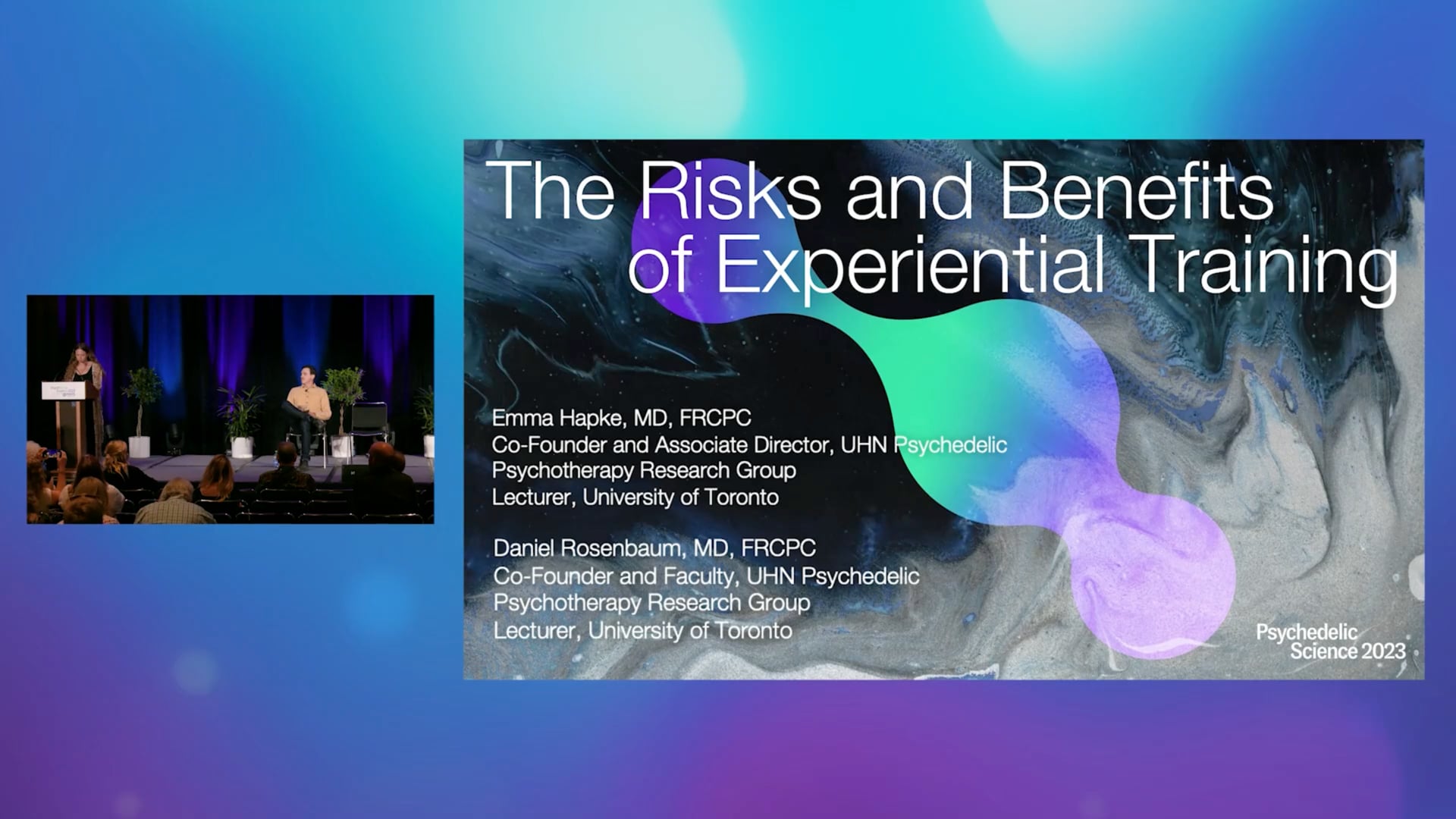
Sandell and colleagues discuss the benefits and risks of experiential training in psychedelic therapy for therapists, including potential therapeutic and theoretical functions, as well as risks like dual relationships and
Panel of experts explores psychedelics' role in conflict resolution, restorative justice, and peace-building. Discussion includes research, experiences, and ethical considerations for integrating psychedelics into transformative processes.
Therapists and religious professionals discuss ethical considerations in using psychedelics with vulnerable individuals, emphasizing the need for integrity and accountability in the psychedelic profession.
Psychedelic-assisted therapy commonly involves experiences of self-love, love towards others, love received, and being in love. Research explores these experiences' healing potential and integration in therapy.
MDMA's therapeutic mechanism differs from classical psychedelics, showing potential for treating CNS disorders. Shulgin's 1970s research inspired exploration of modifying MDMA's structure and developing novel compounds for improved effects.
Stanislav Grof, a pioneer in psychedelic research, presents the Grof® Legacy Training on 'holotropic' states of consciousness, with colleagues from international psychedelic training programs.
Brigitte Grof, Stanislav Grof, Diane Haug, Javier Charme, Neil Hannon, Jay Dufrechou
Psychedelic research faces challenges balancing methodological rigor with preserving subjective experiences in clinical trials, aiming to avoid bias while capturing the full impact of psychedelics on participants.
Psychedelics' role in human experience and consciousness is explored through interdisciplinary research, discussing ethical concerns and the need for expertise in psychedelic therapy.
Lauren Taus, a psychedelic assisted therapist, discusses a new approach to drugs, family, and healing in therapy sessions and educational programs at Inbodied Life.